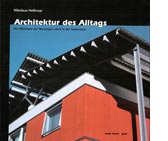
This book shows the architecture of the 90s in Graz. One of the themes of the book was subsidized housing, as well as the themes of the architectural projects and the factor of ecological and energyoptimized constructing. Dr. Nikolaus Hellmayr has evaluated many architectural projects in Austria, has functioned as a judge in competitions and also as consultant for many architects. He also works for the University of Graz and the University of Vienna.
Chapter 9 in the book is about Dr. Adil Lari’s solar settlement in Graz. The literature focuses on the solar technology used in this building, and the strategies initiated in order to ensure the best possible utilization of this technology. One of Dr. Lari’s arguments was, that 70% of energy can be saved, if the residents receive instructions how to best and most efficiently use the technologies at hand rather than to introduce costly and complicated technology. This was proven correct by an empiric study performed over a certain period of time. The building is positioned in an optimal angle to the sun, which allows for an efficient use of the sun’s energy. The slight bend of the building, as well as the fact that the façade of the building is made of glass allows for the sun’s radiation to be funneled. Blinds offer shade and cooling in the summer. They can be programmed and controlled automatically but also operated manually. These factors (shape of the building, alignment of building, materials used for construction of building, technology like the blinds), in combination with a simple solar system for hot water generation generates the energy‐effect which was predicted by the architect, Dr. Lari in the beginning phases of the project. The settlement includes several green spaces, which are collectively used, rather than as private garden spaces.